
![تقرير البعثة الخاصة إلى مصر بقيادة اللورد ميلنر، وأوراق ذات صلة [<span dir="ltr">و١٥٤</span>] (٤٧٣/٣١٠)](https://iiif.qdl.qa/iiif/images/81055/vdc_100000001491.0x000295/Mss Eur F112_260_0310.jp2/full/!1200,1200/0/default.jpg "تقرير البعثة الخاصة إلى مصر بقيادة اللورد ميلنر، وأوراق ذات صلة [<span dir=\"ltr\">و١٥٤</span>] (٤٧٣/٣١٠)")
تقرير البعثة الخاصة إلى مصر بقيادة اللورد ميلنر، وأوراق ذات صلة [و١٥٤] (٤٧٣/٣١٠)
محتويات السجل: ملف واحد (٢٣٧ ورقة). يعود تاريخه إلى ١٥ مايو ١٩٢٠-١٤ أكتوبر ١٩٢١. اللغة أو اللغات المستخدمة: الإنجليزية. النسخة الأصلية محفوظة في المكتبة البريطانية: أوراق خاصة وثائق جُمعت بصفة شخصية. وسجلات من مكتب الهند إدارة الحكومة البريطانية التي كانت الحكومة في الهند ترفع إليها تقاريرها بين عامي ١٨٥٨ و١٩٤٧، حيث خلِفت مجلس إدارة شركة الهند الشرقية. .
نسخ
النسخ مستحدث آليًا ومن المرجّح أن يحتوي على أخطاء.
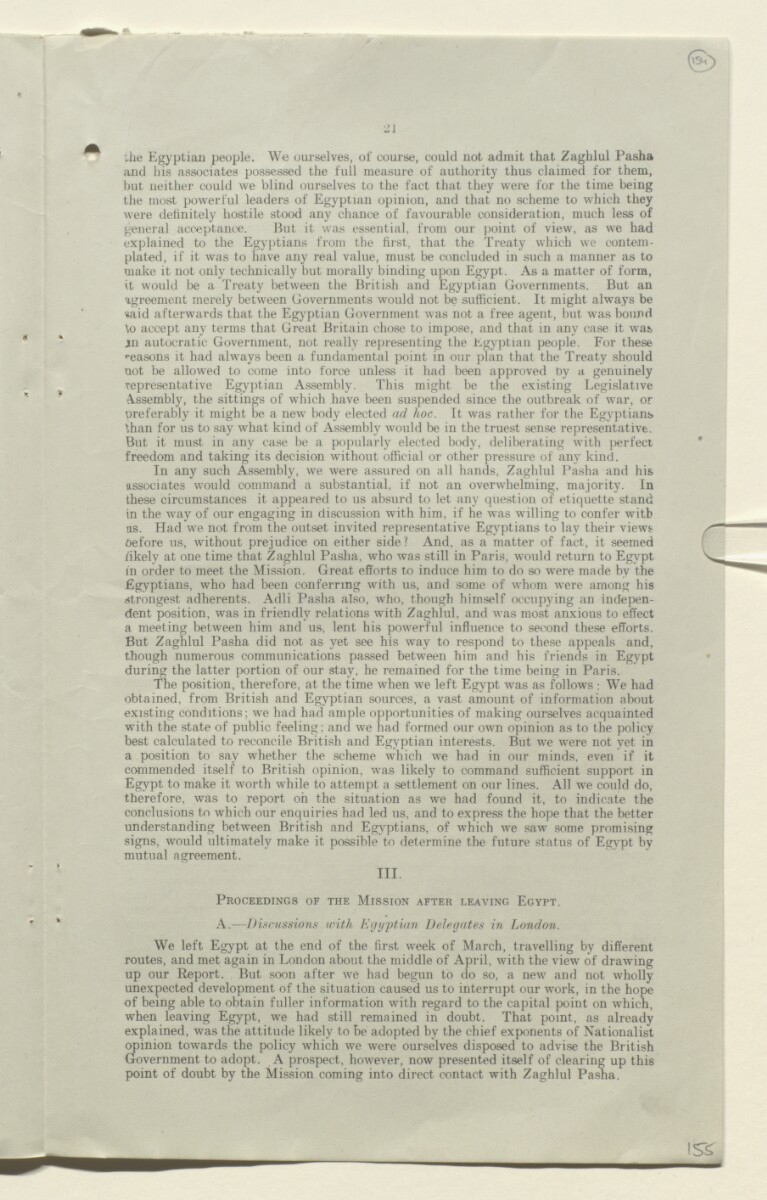
Jie Egyptian people. We ourselves, of course, could not admit that Zaghlul Pasha
and his associates possessed the full measure of authority thus claimed for them,
but neither could we blind ourselves to the fact that they were for the time being
the most powerful leaders of Egyptian opinion, and that no scheme to which they
were definitely hostile stood any chance of favourable consideration, much less of
general acceptance. But it was essential, from our point of view, as we had
explained to the Egyptians from the first, that the Treaty which we contem
plated, if it was to have any real value, must be concluded in such a manner as to
make it not only technically but morally binding upon Egypt. As a matter of form,
it would be a Treaty between the British and Egyptian Governments. But an
agreement merely between Governments would not be sufficient. It might always be
said afterwards that the Egyptian Government was not a free agent, but was bound
\o accept any terms that Great Britain chose to impose, and that in any case it was
in autocratic Government, not really representing the Egyptian people. For these
reasons it had always been a fundamental point in our plan that the Treaty should
not be allowed to come into force unless it had been approved Dy a genuinely
representative Egyptian Assembly. This might be the existing Legislative
Assembly, the sittings of which have been suspended since the outbreak of war, or
preferably it might be a new body elected ad hoc. It was rather for the Egyptians
than for us to say what kind of Assembly would be in the truest sense representative.
But it must in any case be a popularly elected body, deliberating with perfect
freedom and taking its decision without official or other pressure of any kind.
In any such Assembly, we were assured on all hands, Zaghlul Pasha and his
associates would command a substantial, if not an overwhelming, majority. In
these circumstances it appeared to us absurd to let any question of etiquette stand
in the way of our engaging in discussion with him, if he was willing to confer with
us. Had we not from the outset invited representative Egyptians to lay their views-
Oefore us, without prejudice on either side? And, as a matter of fact, it seemed
likely at one time that Zaghlul Pasha, who was still in Paris, would return to Egypt
in order to meet the Mission. Great efforts to induce him to do so were made by the
Egyptians, who had been conferring with us, and some of whom were among his
strongest adherents. Adli Pasha also, who, though himself occupying an indepen
dent position, was in friendly relations with Zaghlul, and was most anxious to effect
a meeting between him and us, lent his powerful influence to second these efforts.
But Zaghlul Pasha did not as yet see his way to respond to these appeals and,
though numerous communications passed between him and his friends in Egypt
during the latter portion of our stay, he remained for the time being in Paris.
The position, therefore, at the time when we left Egypt was as follows : We had
obtained, from British and Egyptian sources, a vast amount of information about
existing conditions; we had had ample opportunities of making ourselves acquainted
with the state of public feeling; and we had formed our own opinion as to the policy
best calculated to reconcile British and Egyptian interests. But we were not yet in
a position to say whether the scheme which we had in our minds, even if it
commended itself to British opinion, was likely to command sufficient support in
Egypt to make it worth while to attempt a settlement on our lines. All we could do,
therefore, was to report oh the situation as we had found it, to indicate the
conclusions to which our enquiries had led us, and to express the hope that the better
understanding between British and Egyptians, of which we saw some promising
signs, would ultimately make it possible to determine the future status of Egypt by
mutual agreement.
III.
Proceedings of the Mission after leaving Egypt.
A .—Discussions with Egyptian Delegates in London.
We left Egypt at the end of the first week of March, travelling by different
routes, and met again in London about the middle of April, with the view of drawing
up our Report. But soon after we had begun to do so, a new and not wholly
unexpected development of the situation caused us to interrupt our work, in the hope
of being able to obtain fuller information with regard to the capital point on which,
when leaving Egypt, we had still remained in doubt. That point, as already
explained, was the attitude likely to be adopted by the chief exponents of Nationalist
opinion towards the policy which we were ourselves disposed to advise the British
Government to adopt. A prospect, however, now presented itself of clearing up this
point of doubt by the Mission coming into direct contact with Zaghlul Pasha.
حول هذه المادة
- المحتوى
يحتوي الملف على مراسلات ومذكرات وتقارير رسمية تتعلق بالشؤون السياسية في مصر. المتراسلون والكاتبون هم مسؤولون في وزارة الخارجية (كان اللورد كرزون وزير الدولة للشؤون الخارجية في ذلك الوقت)، مكتب الحرب البريطاني، وزارة الطيران، الأميرالية، مكتب المستعمرات البريطانية، مجلس التجارة، مجلس التعليم، بالإضافة إلى الخدمة المدنية المصرية.
يحتوي الملف على نسخ من تقارير البعثة الخاصة إلى مصر (الأوراق ١-٧، ٧٥-٩٣، ١٧٥-١٩٤) بقيادة اللورد ألفريد ميلنر، والتي كانت تهدف إلى إجراء التحقيقات وتقديم المشورة في أعقاب قيام الثورة المصرية في ١٩١٩. يأتي جزءٌ كبير من محتوى الملف ردًا على نتائج وتوصيات البعثة، ويناقش إمكانيات التوصل إلى تسوية سياسية مع مصر.
- الشكل والحيّز
- ملف واحد (٢٣٧ ورقة)
- الترتيب
الملف مرتب ترتيبًا زمنيًا من بدايته إلى نهايته.
- الخصائص المادية
ترقيم الأوراق: يبدأ تسلسل ترقيم الأوراق (المستخدم للأغراض المرجعية) على الغلاف الأمامي بالرقم ١، وينتهي داخل الغلاف الخلفي بالرقم ٢٣٥؛ هذه الأرقام مكتوبة بالقلم الرصاص ومحاطة بدائرة في أعلى يمين صفحة الوجه الجانب الأمامي للورقة أو لفرخٍ من الورق. كثيرًا ما يشار إليه اختصارًا بالحرف "و". من كل ورقة. يوجد في الملف استثناء واحد في ترقيم الأوراق، ص. ٧٦أ.
- لغة الكتابة
- الإنجليزية بالأحرف اللاتينية للاطّلاع على المعلومات الكاملة لهذا السجل
استخدام وإعادة نشر هذه المادة
- إعادة نشر هذه المادة
تقرير البعثة الخاصة إلى مصر بقيادة اللورد ميلنر، وأوراق ذات صلة [و١٥٤] (٤٧٣/٣١٠)و المكتبة البريطانية: أوراق خاصة وسجلات من مكتب الهندو Mss Eur F112/260و مكتبة قطر الرقمية <https://www.qdl.qa/archive/81055/vdc_100080131820.0x00006f> [تم الوصول إليها في ٤ يونيو ٢٠٢٦]
https://www.qdl.qa/العربية/archive/81055/vdc_100080131820.0x00006f
يمكنك نسخ ولصق الفقرة التالية لتضمين الصورة في صفحة الويب الخاصة بك.
<meta charset="utf-8"><a href="https://www.qdl.qa/العربية/archive/81055/vdc_100080131820.0x00006f">تقرير البعثة الخاصة إلى مصر بقيادة اللورد ميلنر، وأوراق ذات صلة [<span dir="ltr">و١٥٤</span>] (٤٧٣/٣١٠)</a> <a href="https://www.qdl.qa/العربية/archive/81055/vdc_100080131820.0x00006f"> <img src="https://iiif.qdl.qa/iiif/images/81055/vdc_100000001491.0x000295/Mss Eur F112_260_0310.jp2/full/!280,240/0/default.jpg" alt="" /> </a>
هذا التسجيل IIIF له ملف ظاهر متوفر كما يلي. إذا كان لديك عارض متوافق للصور يمكنك سحب الأيقونة لتحميله.https://www.qdl.qa/العربية/iiif/81055/vdc_100000001491.0x000295/manifestافتح في المتصفح العامافتح في عارض IIIF ميرادورطرق إضافية لاستخدام صور الأرشيف الرقمي
حقوق النسخ والتأليف: كيفية استخدام هذا المحتوى
- رقم الاستدعاء
- Mss Eur F112/260
- العنوان
- تقرير البعثة الخاصة إلى مصر بقيادة اللورد ميلنر، وأوراق ذات صلة
- الصفحات
- ظ٢٣٥:و١٤٤ ،وأ١٤٤ ،ظ١٤٣:و١٤٣ ،ظ١٤٠:و٧٧ ،ظأ٧٦:وأ٧٦ ،ظ٧٦:و٥٣ ،ظ٥٠:و٤٢ ،ظ٣٩:و٢ ،داخلي-أمامي ،أمامي
- المؤلف
- شركة الهند الشرقية ولجنة البرلمان البريطاني لشئون الهند ومكتب الهند وإدارات الحكومة البريطانية الأخرى
- شروط الاستخدام
- ترخيص حكومي عام