
![تقرير البعثة الخاصة إلى مصر بقيادة اللورد ميلنر، وأوراق ذات صلة [<span dir="ltr">و٢١٦</span>] (٤٧٣/٤٣٤)](https://iiif.qdl.qa/iiif/images/81055/vdc_100000001491.0x000295/Mss Eur F112_260_0434.jp2/full/!1200,1200/0/default.jpg "تقرير البعثة الخاصة إلى مصر بقيادة اللورد ميلنر، وأوراق ذات صلة [<span dir=\"ltr\">و٢١٦</span>] (٤٧٣/٤٣٤)")
تقرير البعثة الخاصة إلى مصر بقيادة اللورد ميلنر، وأوراق ذات صلة [و٢١٦] (٤٧٣/٤٣٤)
محتويات السجل: ملف واحد (٢٣٧ ورقة). يعود تاريخه إلى ١٥ مايو ١٩٢٠-١٤ أكتوبر ١٩٢١. اللغة أو اللغات المستخدمة: الإنجليزية. النسخة الأصلية محفوظة في المكتبة البريطانية: أوراق خاصة وثائق جُمعت بصفة شخصية. وسجلات من مكتب الهند إدارة الحكومة البريطانية التي كانت الحكومة في الهند ترفع إليها تقاريرها بين عامي ١٨٥٨ و١٩٤٧، حيث خلِفت مجلس إدارة شركة الهند الشرقية. .
نسخ
النسخ مستحدث آليًا ومن المرجّح أن يحتوي على أخطاء.
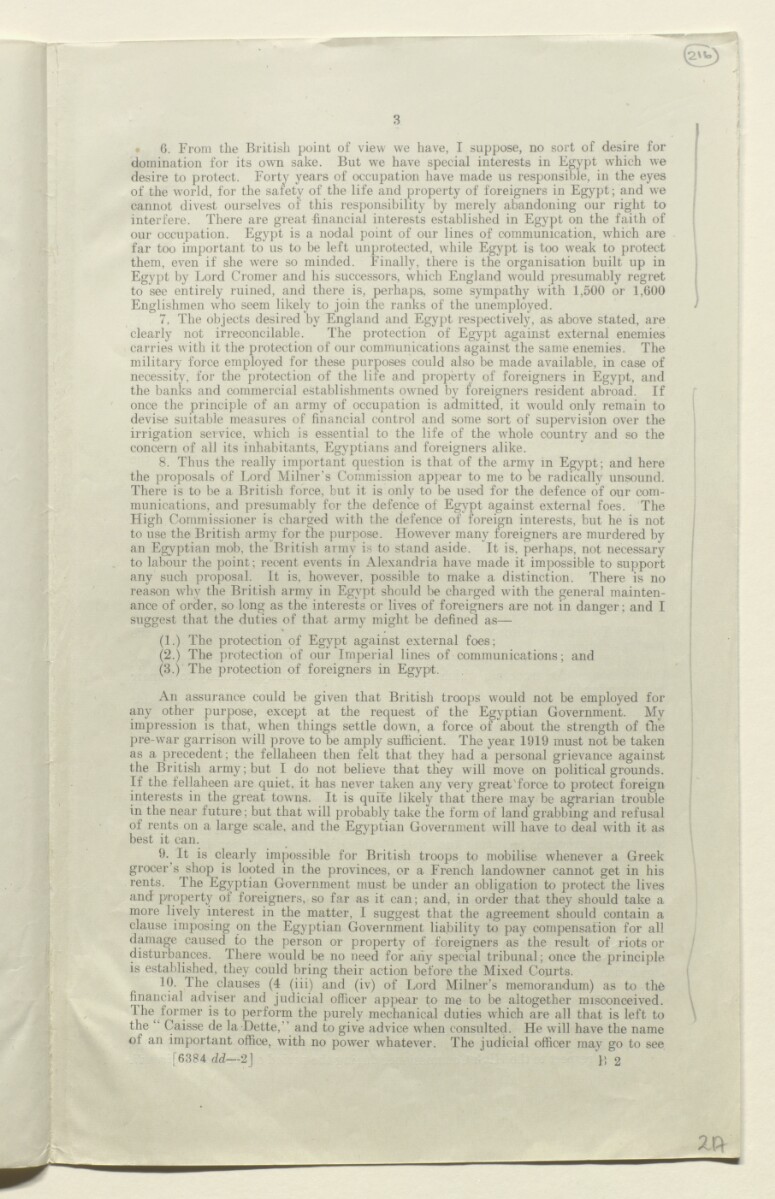
6 . From the British point of view we have, I suppose, no sort of desire for
domination for its own sake. But we have special interests in Egypt which we
desire to protect. Forty years of occupation have made us responsible, in the eyes
of the world, for the safety of the life and property of foreigners in Egypt; and we
cannot divest ourselves of this responsibility by merely abandoning our right to
interfere. There are great financial interests established in Egypt on the faith of
our occupation. Egypt is a nodal point of our lines of communication, which are
far too important to us to be left unprotected, while Egypt is too weak to protect
them, even if she were so minded. Finally, there is the organisation built up in
Egypt by Lord Cromer and his successors, which England would presumably regret
to see entirely ruined, and there is, perhaps, some sympathy with 1,500 or 1,600
Englishmen who seem likely to join the ranks of the unemployed.
7. The objects desired by England and Egypt respectively, as above stated, are
clearly not irreconcilable. The protection of Egypt against external enemies
carries with it the protection of our communications against the same enemies. The
military force employed for these purposes could also be made available, in case of
necessity, for the protection of the life and property of foreigners in Egypt, and
the banks and commercial establishments owned by foreigners resident abroad. If
once the principle of an army of occupation is admitted, it would only remain to
devise suitable measures of financial control and some sort of supervision over the
irrigation service, which is essential to the life of the whole country and so the
concern of ail its inhabitants, Egyptians and foreigners alike.
8 . Thus the really important question is that of the army in Egypt; and here
the proposals of Lord Milner's Commission appear to me to be radically unsound.
There is to be a British force, but it is only to be used for the defence of our com
munications, and presumably for the defence of Egypt against external foes. The
High Commissioner is charged with the defence of foreign interests, but he is not
to use the British army for the purpose. However many foreigners are murdered by
an Egyptian mob, the British army is to stand aside. It is, perhaps, not necessary
to labour the point; recent events in Alexandria have made it impossible to support
any such proposal. It is, however, possible to make a distinction. There is no
reason why the British army in Egypt should be charged wdth the general mainten
ance of order, so long as the interests or lives of foreigners are not in danger; and I
suggest that the duties of that army might be defined as—
(1.) The protection of Egypt against external foes;
(2.) The protection of our Imperial lines of communications; and
(3.) The protection of foreigners in Egypt.
An assurance could be given that British troops would not be employed for
any other purpose, except at the request of the Egyptian Government. My
impression is that, when things settle down, a force of about the strength of the
pre-war garrison will prove to be amply sufficient. The year 1919 must not be taken
as a precedent; the fellaheen then felt that they had a personal grievance against
the British army; but I do not believe that they will move on political grounds.
If the fellaheen are quiet, it has never taken any very great'force to protect foreign
interests in the great towns. It is quite likely that there may be agrarian trouble
in the near future; but that will probably take the form of land grabbing and refusal
of rents on a large scale, and the Egyptian Government will have to deal with it as
best it can.
9. It is clearly impossible for British troops to mobilise whenever a Greek
grocer s shop is looted in the provinces, or a French landowner cannot get in his
rents. The Egyptian Government must be under an obligation to protect the lives
and property of foreigners, so far as it can; and, in order that they should take a
more lively interest in the matter, I suggest that the agreement should contain a
clause imposing on the Egyptian Government liability to pay compensation for all
damage caused to the person or property of foreigners as the result of riots or
disturbances. There would be no need for any special tribunal; once the principle
is established, they could bring their action before the Mixed Courts.
10. I he clauses (4 (iii) and (iv) of Lord Milner’s memorandum) as to th 6
financial adviser and judicial officer appear to me to be altogether misconceived.
1 he former is to perform the purely mechanical duties which are all that is left to
the “ Caisse de la -Dette," and to give advice when consulted. He will have the name
of an important office, with no power whatever. The judicial officer may go to see
| 6384 dd —2J p, 2
حول هذه المادة
- المحتوى
يحتوي الملف على مراسلات ومذكرات وتقارير رسمية تتعلق بالشؤون السياسية في مصر. المتراسلون والكاتبون هم مسؤولون في وزارة الخارجية (كان اللورد كرزون وزير الدولة للشؤون الخارجية في ذلك الوقت)، مكتب الحرب البريطاني، وزارة الطيران، الأميرالية، مكتب المستعمرات البريطانية، مجلس التجارة، مجلس التعليم، بالإضافة إلى الخدمة المدنية المصرية.
يحتوي الملف على نسخ من تقارير البعثة الخاصة إلى مصر (الأوراق ١-٧، ٧٥-٩٣، ١٧٥-١٩٤) بقيادة اللورد ألفريد ميلنر، والتي كانت تهدف إلى إجراء التحقيقات وتقديم المشورة في أعقاب قيام الثورة المصرية في ١٩١٩. يأتي جزءٌ كبير من محتوى الملف ردًا على نتائج وتوصيات البعثة، ويناقش إمكانيات التوصل إلى تسوية سياسية مع مصر.
- الشكل والحيّز
- ملف واحد (٢٣٧ ورقة)
- الترتيب
الملف مرتب ترتيبًا زمنيًا من بدايته إلى نهايته.
- الخصائص المادية
ترقيم الأوراق: يبدأ تسلسل ترقيم الأوراق (المستخدم للأغراض المرجعية) على الغلاف الأمامي بالرقم ١، وينتهي داخل الغلاف الخلفي بالرقم ٢٣٥؛ هذه الأرقام مكتوبة بالقلم الرصاص ومحاطة بدائرة في أعلى يمين صفحة الوجه الجانب الأمامي للورقة أو لفرخٍ من الورق. كثيرًا ما يشار إليه اختصارًا بالحرف "و". من كل ورقة. يوجد في الملف استثناء واحد في ترقيم الأوراق، ص. ٧٦أ.
- لغة الكتابة
- الإنجليزية بالأحرف اللاتينية للاطّلاع على المعلومات الكاملة لهذا السجل
استخدام وإعادة نشر هذه المادة
- إعادة نشر هذه المادة
تقرير البعثة الخاصة إلى مصر بقيادة اللورد ميلنر، وأوراق ذات صلة [و٢١٦] (٤٧٣/٤٣٤)و المكتبة البريطانية: أوراق خاصة وسجلات من مكتب الهندو Mss Eur F112/260و مكتبة قطر الرقمية <https://www.qdl.qa/archive/81055/vdc_100080131821.0x000023> [تم الوصول إليها في ٤ يونيو ٢٠٢٦]
https://www.qdl.qa/العربية/archive/81055/vdc_100080131821.0x000023
يمكنك نسخ ولصق الفقرة التالية لتضمين الصورة في صفحة الويب الخاصة بك.
<meta charset="utf-8"><a href="https://www.qdl.qa/العربية/archive/81055/vdc_100080131821.0x000023">تقرير البعثة الخاصة إلى مصر بقيادة اللورد ميلنر، وأوراق ذات صلة [<span dir="ltr">و٢١٦</span>] (٤٧٣/٤٣٤)</a> <a href="https://www.qdl.qa/العربية/archive/81055/vdc_100080131821.0x000023"> <img src="https://iiif.qdl.qa/iiif/images/81055/vdc_100000001491.0x000295/Mss Eur F112_260_0434.jp2/full/!280,240/0/default.jpg" alt="" /> </a>
هذا التسجيل IIIF له ملف ظاهر متوفر كما يلي. إذا كان لديك عارض متوافق للصور يمكنك سحب الأيقونة لتحميله.https://www.qdl.qa/العربية/iiif/81055/vdc_100000001491.0x000295/manifestافتح في المتصفح العامافتح في عارض IIIF ميرادورطرق إضافية لاستخدام صور الأرشيف الرقمي
حقوق النسخ والتأليف: كيفية استخدام هذا المحتوى
- رقم الاستدعاء
- Mss Eur F112/260
- العنوان
- تقرير البعثة الخاصة إلى مصر بقيادة اللورد ميلنر، وأوراق ذات صلة
- الصفحات
- ظ٢٣٥:و١٤٤ ،وأ١٤٤ ،ظ١٤٣:و١٤٣ ،ظ١٤٠:و٧٧ ،ظأ٧٦:وأ٧٦ ،ظ٧٦:و٥٣ ،ظ٥٠:و٤٢ ،ظ٣٩:و٢ ،داخلي-أمامي ،أمامي
- المؤلف
- شركة الهند الشرقية ولجنة البرلمان البريطاني لشئون الهند ومكتب الهند وإدارات الحكومة البريطانية الأخرى
- شروط الاستخدام
- ترخيص حكومي عام