
![تقرير البعثة الخاصة إلى مصر بقيادة اللورد ميلنر، وأوراق ذات صلة [<span dir="ltr">و١٩٣</span>] (٤٧٣/٣٨٨)](https://iiif.qdl.qa/iiif/images/81055/vdc_100000001491.0x000295/Mss Eur F112_260_0388.jp2/full/!1200,1200/0/default.jpg "تقرير البعثة الخاصة إلى مصر بقيادة اللورد ميلنر، وأوراق ذات صلة [<span dir=\"ltr\">و١٩٣</span>] (٤٧٣/٣٨٨)")
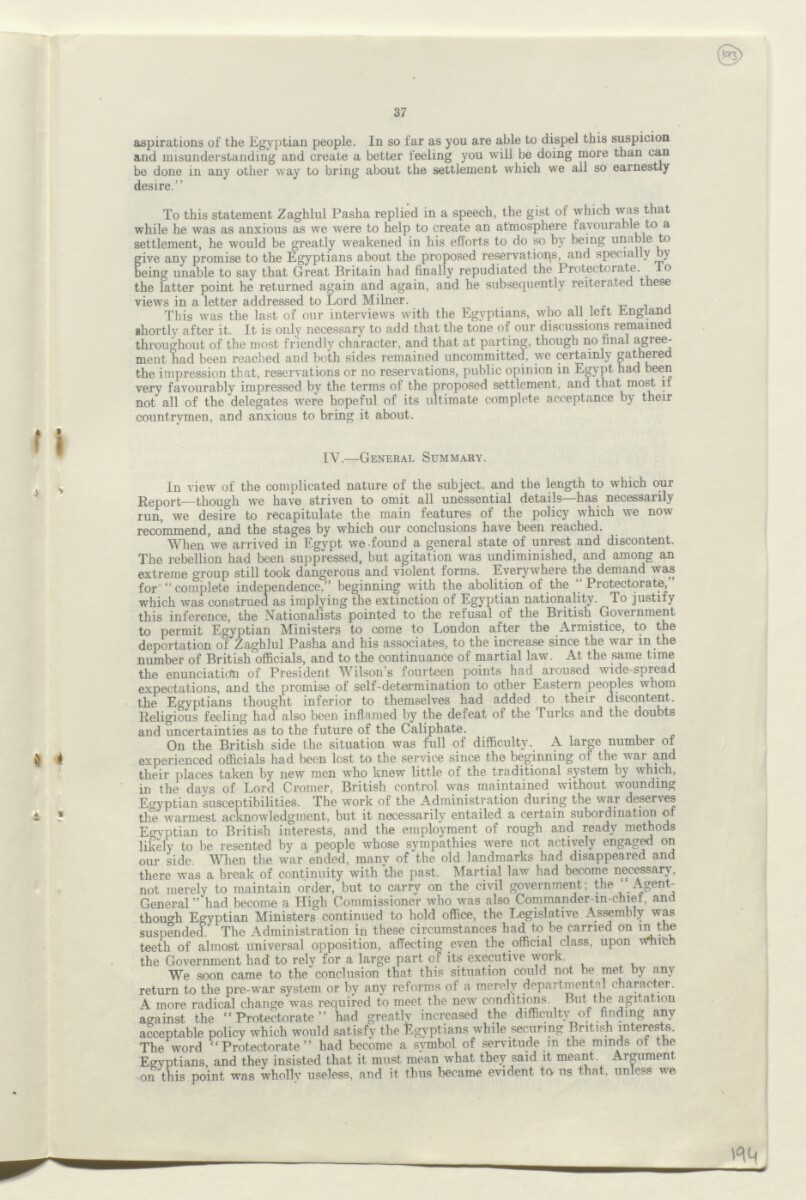
تقرير البعثة الخاصة إلى مصر بقيادة اللورد ميلنر، وأوراق ذات صلة [و١٩٣] (٤٧٣/٣٨٨)
محتويات السجل: ملف واحد (٢٣٧ ورقة). يعود تاريخه إلى ١٥ مايو ١٩٢٠-١٤ أكتوبر ١٩٢١. اللغة أو اللغات المستخدمة: الإنجليزية. النسخة الأصلية محفوظة في المكتبة البريطانية: أوراق خاصة وثائق جُمعت بصفة شخصية. وسجلات من مكتب الهند إدارة الحكومة البريطانية التي كانت الحكومة في الهند ترفع إليها تقاريرها بين عامي ١٨٥٨ و١٩٤٧، حيث خلِفت مجلس إدارة شركة الهند الشرقية. .
نسخ
النسخ مستحدث آليًا ومن المرجّح أن يحتوي على أخطاء.
37
aspirations of the Egyptian people. In so far as you are able to dispel this suspicion
and misunderstanding and create a better feeling you will be doing more than can
be done in any other way to bring about the settlement which we all so earnestly
desire.”
To this statement Zaghlul Pasha replied in a speech, the gist of which was that
while he was as anxious as we were to help to create an atmosphere favourable to a
settlement, he would be greatly weakened in his efforts to do so by being unable to
give any promise to the Egyptians about the proposed reservations, and specially by
being unable to say that Great Britain had finally repudiated the Protectorate.
the latter point he returned again and again, and he subsequently reiterated these
views in a letter addressed to Lord Milner. .
This was the last of our interviews with the Egyptians, who all left England
shortly after it. It is only necessary to add that the tone of our discussions remained
throughout of the most friendly character, and that at parting, though no final agree
ment had been reached and both sides remained uncommitted, we certainly gathered
the impression that, reservations or no reservations, public opinion in Egypt had been
very favourably impressed by the terms of the proposed settlement, and that most if
not" all of the delegates were hopeful of its ultimate complete acceptance by their
countrvmen, and anxious to bring it about.
r i
IV.— General Summary.
^ In view of the complicated nature of the subject, and the length to which our
Report—though we have striven to omit all unessential details has necessarily
run, we desire to recapitulate the main features of the policy which we now
recommend, and the stages by which our conclusions have been reached.
When we arrived in Egypt we-found a general state of unrest and discontent.
The rebellion had been suppressed, but agitation was undiminished, and among an
extreme group still took dangerous and violent forms. Everywhere the demand was
for' “ complete independence,” beginning with the abolition of the “ Protectorate,”
which was construed as implying the extinction of Egyptian nationality. To justify
this inference, the Nationalists pointed to the refusal of the British Government
to permit Egyptian Ministers to come to London after the Armistice, to the
deportation of Zaghlul Pasha and his associates, to the increase since the war in the
number of British officials, and to the continuance of martial law. At the same time
the enunciaticfn of President Wilson s fourteen points had aroused wide-spread
expectations, and the promise of self-determination to other Eastern peoples whom
the Egyptians thought inferior to themselves had added to their discontent.
Religious feeling had also been inflamed by the defeat of the Turks and the doubts
and uncertainties as to the future of the Caliphate.
On the British side the situation was full of difficulty. A large number of
$ ♦ experienced officials had been lost to the service since the beginning of the ^\ar and
their places taken by new men who knew little of the traditional system by which,
in the days of Lord Cromer, British control was maintained without wounding
Egyptian susceptibilities. The work of the Administration during the war deserves
i * the warmest acknowledgment, but it necessarily entailed a certain subordination of
Egyptian to British interests, and the employment of rough and ready methods
likely to be resented by a people whose sympathies were not actively engaged on
our side. When the war ended, many of the old landmarks had disappeared and
there was a break of continuity with the past. Martial law had become necessary,
not merely to maintain order, but to carry on the civil government; the Agent-
General ” had become a High Commissioner who was also Commander-in-chief, and
though Egyptian Ministers continued to hold office, the Legislative Assembly was
suspended. The Administration in these circumstances had to be carried on id the
teeth of almost universal opposition, affecting even the official class, upon Which
the Government had to rely for a large part of its executive work.
We soon came to the conclusion that this situation could not be met by any
return to the pre-war system or by any reforms of a merely departmental character.
A more radical change was required to meet the new conditions But the agitation
against the “Protectorate” had greatly increased the difficulty of finding any
acceptable policy which would satisfy the Egyptians while securing British mteres s.
The word “Protectorate” had become a symbol of servitude m the minds ot the
Egyptians, and they insisted that it must mean what they said it meant. Argument
on this point was wholly useless, and it thus became evident to ns that, unless we
r-
حول هذه المادة
- المحتوى
يحتوي الملف على مراسلات ومذكرات وتقارير رسمية تتعلق بالشؤون السياسية في مصر. المتراسلون والكاتبون هم مسؤولون في وزارة الخارجية (كان اللورد كرزون وزير الدولة للشؤون الخارجية في ذلك الوقت)، مكتب الحرب البريطاني، وزارة الطيران، الأميرالية، مكتب المستعمرات البريطانية، مجلس التجارة، مجلس التعليم، بالإضافة إلى الخدمة المدنية المصرية.
يحتوي الملف على نسخ من تقارير البعثة الخاصة إلى مصر (الأوراق ١-٧، ٧٥-٩٣، ١٧٥-١٩٤) بقيادة اللورد ألفريد ميلنر، والتي كانت تهدف إلى إجراء التحقيقات وتقديم المشورة في أعقاب قيام الثورة المصرية في ١٩١٩. يأتي جزءٌ كبير من محتوى الملف ردًا على نتائج وتوصيات البعثة، ويناقش إمكانيات التوصل إلى تسوية سياسية مع مصر.
- الشكل والحيّز
- ملف واحد (٢٣٧ ورقة)
- الترتيب
الملف مرتب ترتيبًا زمنيًا من بدايته إلى نهايته.
- الخصائص المادية
ترقيم الأوراق: يبدأ تسلسل ترقيم الأوراق (المستخدم للأغراض المرجعية) على الغلاف الأمامي بالرقم ١، وينتهي داخل الغلاف الخلفي بالرقم ٢٣٥؛ هذه الأرقام مكتوبة بالقلم الرصاص ومحاطة بدائرة في أعلى يمين صفحة الوجه الجانب الأمامي للورقة أو لفرخٍ من الورق. كثيرًا ما يشار إليه اختصارًا بالحرف "و". من كل ورقة. يوجد في الملف استثناء واحد في ترقيم الأوراق، ص. ٧٦أ.
- لغة الكتابة
- الإنجليزية بالأحرف اللاتينية للاطّلاع على المعلومات الكاملة لهذا السجل
استخدام وإعادة نشر هذه المادة
- إعادة نشر هذه المادة
تقرير البعثة الخاصة إلى مصر بقيادة اللورد ميلنر، وأوراق ذات صلة [و١٩٣] (٤٧٣/٣٨٨)و المكتبة البريطانية: أوراق خاصة وسجلات من مكتب الهندو Mss Eur F112/260و مكتبة قطر الرقمية <https://www.qdl.qa/archive/81055/vdc_100080131820.0x0000bd> [تم الوصول إليها في ٤ يونيو ٢٠٢٦]
https://www.qdl.qa/العربية/archive/81055/vdc_100080131820.0x0000bd
يمكنك نسخ ولصق الفقرة التالية لتضمين الصورة في صفحة الويب الخاصة بك.
<meta charset="utf-8"><a href="https://www.qdl.qa/العربية/archive/81055/vdc_100080131820.0x0000bd">تقرير البعثة الخاصة إلى مصر بقيادة اللورد ميلنر، وأوراق ذات صلة [<span dir="ltr">و١٩٣</span>] (٤٧٣/٣٨٨)</a> <a href="https://www.qdl.qa/العربية/archive/81055/vdc_100080131820.0x0000bd"> <img src="https://iiif.qdl.qa/iiif/images/81055/vdc_100000001491.0x000295/Mss Eur F112_260_0388.jp2/full/!280,240/0/default.jpg" alt="" /> </a>
هذا التسجيل IIIF له ملف ظاهر متوفر كما يلي. إذا كان لديك عارض متوافق للصور يمكنك سحب الأيقونة لتحميله.https://www.qdl.qa/العربية/iiif/81055/vdc_100000001491.0x000295/manifestافتح في المتصفح العامافتح في عارض IIIF ميرادورطرق إضافية لاستخدام صور الأرشيف الرقمي
حقوق النسخ والتأليف: كيفية استخدام هذا المحتوى
- رقم الاستدعاء
- Mss Eur F112/260
- العنوان
- تقرير البعثة الخاصة إلى مصر بقيادة اللورد ميلنر، وأوراق ذات صلة
- الصفحات
- ظ٢٣٥:و١٤٤ ،وأ١٤٤ ،ظ١٤٣:و١٤٣ ،ظ١٤٠:و٧٧ ،ظأ٧٦:وأ٧٦ ،ظ٧٦:و٥٣ ،ظ٥٠:و٤٢ ،ظ٣٩:و٢ ،داخلي-أمامي ،أمامي
- المؤلف
- شركة الهند الشرقية ولجنة البرلمان البريطاني لشئون الهند ومكتب الهند وإدارات الحكومة البريطانية الأخرى
- شروط الاستخدام
- ترخيص حكومي عام