
![تقرير البعثة الخاصة إلى مصر بقيادة اللورد ميلنر، وأوراق ذات صلة [<span dir="ltr">ظ٨١</span>] (٤٧٣/١٦٤)](https://iiif.qdl.qa/iiif/images/81055/vdc_100000001491.0x000295/Mss Eur F112_260_0164.jp2/full/!1200,1200/0/default.jpg "تقرير البعثة الخاصة إلى مصر بقيادة اللورد ميلنر، وأوراق ذات صلة [<span dir=\"ltr\">ظ٨١</span>] (٤٧٣/١٦٤)")
تقرير البعثة الخاصة إلى مصر بقيادة اللورد ميلنر، وأوراق ذات صلة [ظ٨١] (٤٧٣/١٦٤)
محتويات السجل: ملف واحد (٢٣٧ ورقة). يعود تاريخه إلى ١٥ مايو ١٩٢٠-١٤ أكتوبر ١٩٢١. اللغة أو اللغات المستخدمة: الإنجليزية. النسخة الأصلية محفوظة في المكتبة البريطانية: أوراق خاصة وثائق جُمعت بصفة شخصية. وسجلات من مكتب الهند إدارة الحكومة البريطانية التي كانت الحكومة في الهند ترفع إليها تقاريرها بين عامي ١٨٥٨ و١٩٤٧، حيث خلِفت مجلس إدارة شركة الهند الشرقية. .
نسخ
النسخ مستحدث آليًا ومن المرجّح أن يحتوي على أخطاء.
16
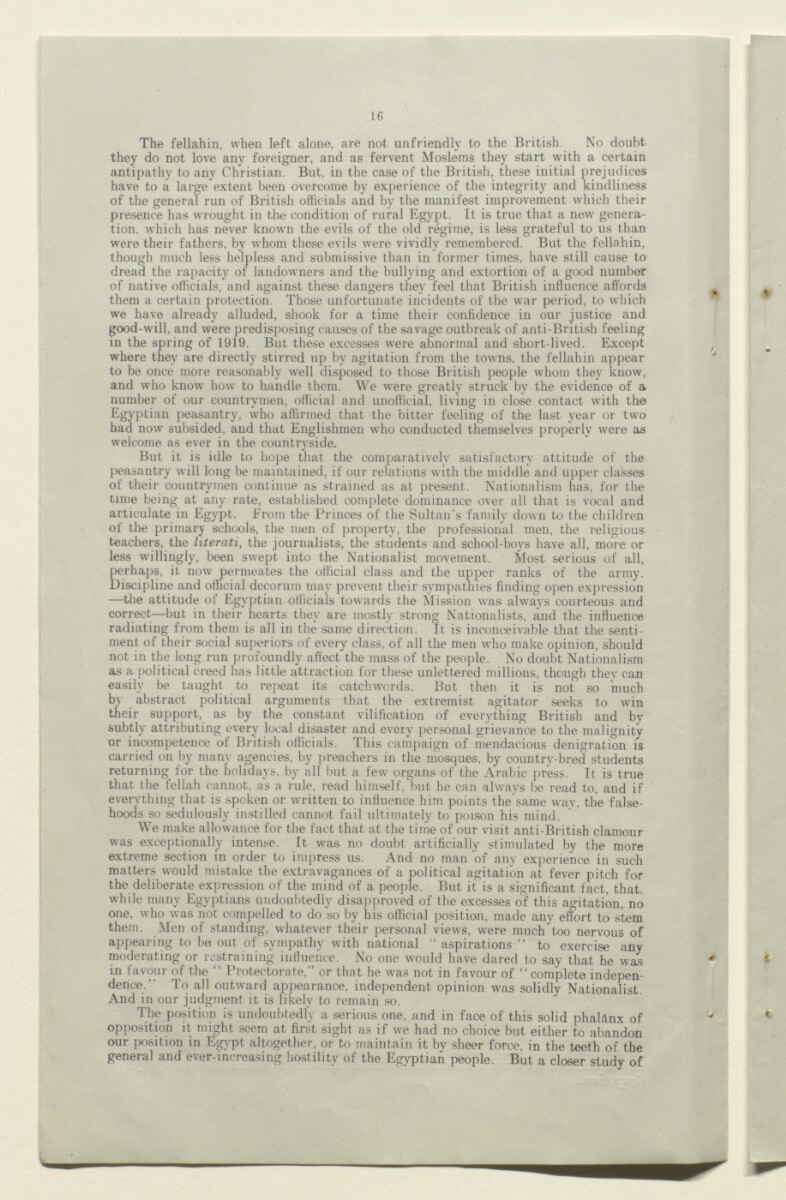
The fellahin, when left alone, are not unfriendly to the British. No doubt
they do not love any foreigner, and as fervent Moslems they start with a certain
antipathy to any Christian. But, in the case of the British, these initial prejudices
have to a large extent been overcome by experience of the integrity and kindliness
of the general run of British officials and by the manifest improvement which their
presence has wrought in the condition of rural Egypt. It is true that a new genera
tion. which has never known the evils of the old regime, is less grateful to us than
were their fathers, by whom these evils were vividly remembered. But the fellahin,
though much less helpless and submissive than in former times, have still cause to
dread the rapacity of landowners and the bullying and extortion of a good number
of native officials, and against these dangers they feel that British influence affords
them a certain protection. Those unfortunate incidents of the war period, to which
we have already alluded, shook for a time their confidence in our justice and
good-will, and were predisposing causes of the savage outbreak of anti-British feeling
in the spring of 1919. But these excesses were abnormal and short-lived. Except
where they are directly stirred up by agitation from the towns, the fellahin appear
to be once more reasonably well disposed to those British people whom they know,
and who know how to handle them. We were greatly struck by the evidence of a
number of our countrymen, official and unofficial, living in close contact with the
Egyptian peasantry, wffio affirmed that the bitter feeling of the last year or two
had now subsided, and that Englishmen who conducted themselves properly were as
welcome as ever in the countryside.
But it is idle to hope that the comparatively satisfactory attitude of the
peasantry will long be maintained, if our relations with the middle and upper classes
of their countrymen continue as strained as at present. Nationalism has, for the
time being at any rate, established complete dominance over all that is vocal and
articulate in Egypt. From the Princes of the Sultan's family down to the children
of the primary schools, the men of property, the professional men, the religious
teachers, the literati, the journalists, the students and school-boys have all, more or
less willingly, been swept into the Nationalist movement. Most serious of all,
perhaps, it now permeates the official class and the upper ranks of the army.
Discipline and official decorum may prevent their sympathies finding open expression
—the attitude of Egyptian ofliciais towards the Mission was always courteous and
correct—but in their hearts they are mostly strong Nationalists, and the influence
radiating from them is all in the same direction. It is inconceivable that the senti
ment of their social superiors of every class, of all the men who make opinion, should
not in the long run profoundly affect the mass of the people. No doubt Nationalism
as a political creed has little attraction for these unlettered millions, though they can
easily be taught to repeat its catchwords. But then it is not so 'much
by abstract political arguments that the extremist agitator seeks to win
their support, as by the constant vilification of everything British and by
subtly attributing every local disaster and every personal grievance to the malignity
or incompetence of British officials. This campaign of mendacious denigration is
carried on by many agencies, by preachers in the mosques, by country-bred students
returning for the holidays, by all but a few organs of the Arabic press. It is true
that the fellah cannot, as a rule, read himself, but he can always be read to, and if
everything that is spoken or written to influence him points the same wav, the false
hoods so sedulously instilled cannot fail ultimately to poison his mind.
We make allowance for the fact that at the time of our visit anti-British clamour
was exceptionally intense. It was no doubt artificially stimulated by the more
extreme section in order to impress us. And no man of any experience in such
matters would mistake the extravagances of a political agitation at fever pitch for
the deliberate expression of the mind of a people. But it is a significant fact, that,
while many Egyptians undoubtedly disapproved of the excesses of this agitation, no
one, who was not compelled to do so by his official position, made any effort to stem
them. Men of standing, whatever their personal views, were much too nervous of
appearing to be out of sympathy with national “ aspirations ” to exercise any
moderating or restraining influence. No one would have dared to say that he was *
in favour of the “ Protectorate,” or that he was not in favour of “complete indepen
dence.” To all outward appearance, independent opinion was solidly Nationalist
And in our judgment it is likely to remain so.
The position is undoubtedly a serious one, and in face of this solid phaUnx of
opposition it might seem at first sight as if we had no choice but either to abandon
our position in Egypt altogether, or to maintain it by sheer force, in the teeth of the
general and ever-increasing hostility of the Egyptian people. But a closer study of
حول هذه المادة
- المحتوى
يحتوي الملف على مراسلات ومذكرات وتقارير رسمية تتعلق بالشؤون السياسية في مصر. المتراسلون والكاتبون هم مسؤولون في وزارة الخارجية (كان اللورد كرزون وزير الدولة للشؤون الخارجية في ذلك الوقت)، مكتب الحرب البريطاني، وزارة الطيران، الأميرالية، مكتب المستعمرات البريطانية، مجلس التجارة، مجلس التعليم، بالإضافة إلى الخدمة المدنية المصرية.
يحتوي الملف على نسخ من تقارير البعثة الخاصة إلى مصر (الأوراق ١-٧، ٧٥-٩٣، ١٧٥-١٩٤) بقيادة اللورد ألفريد ميلنر، والتي كانت تهدف إلى إجراء التحقيقات وتقديم المشورة في أعقاب قيام الثورة المصرية في ١٩١٩. يأتي جزءٌ كبير من محتوى الملف ردًا على نتائج وتوصيات البعثة، ويناقش إمكانيات التوصل إلى تسوية سياسية مع مصر.
- الشكل والحيّز
- ملف واحد (٢٣٧ ورقة)
- الترتيب
الملف مرتب ترتيبًا زمنيًا من بدايته إلى نهايته.
- الخصائص المادية
ترقيم الأوراق: يبدأ تسلسل ترقيم الأوراق (المستخدم للأغراض المرجعية) على الغلاف الأمامي بالرقم ١، وينتهي داخل الغلاف الخلفي بالرقم ٢٣٥؛ هذه الأرقام مكتوبة بالقلم الرصاص ومحاطة بدائرة في أعلى يمين صفحة الوجه الجانب الأمامي للورقة أو لفرخٍ من الورق. كثيرًا ما يشار إليه اختصارًا بالحرف "و". من كل ورقة. يوجد في الملف استثناء واحد في ترقيم الأوراق، ص. ٧٦أ.
- لغة الكتابة
- الإنجليزية بالأحرف اللاتينية للاطّلاع على المعلومات الكاملة لهذا السجل
استخدام وإعادة نشر هذه المادة
- إعادة نشر هذه المادة
تقرير البعثة الخاصة إلى مصر بقيادة اللورد ميلنر، وأوراق ذات صلة [ظ٨١] (٤٧٣/١٦٤)و المكتبة البريطانية: أوراق خاصة وسجلات من مكتب الهندو Mss Eur F112/260و مكتبة قطر الرقمية <https://www.qdl.qa/archive/81055/vdc_100080131819.0x0000a5> [تم الوصول إليها في ٤ يونيو ٢٠٢٦]
https://www.qdl.qa/العربية/archive/81055/vdc_100080131819.0x0000a5
يمكنك نسخ ولصق الفقرة التالية لتضمين الصورة في صفحة الويب الخاصة بك.
<meta charset="utf-8"><a href="https://www.qdl.qa/العربية/archive/81055/vdc_100080131819.0x0000a5">تقرير البعثة الخاصة إلى مصر بقيادة اللورد ميلنر، وأوراق ذات صلة [<span dir="ltr">ظ٨١</span>] (٤٧٣/١٦٤)</a> <a href="https://www.qdl.qa/العربية/archive/81055/vdc_100080131819.0x0000a5"> <img src="https://iiif.qdl.qa/iiif/images/81055/vdc_100000001491.0x000295/Mss Eur F112_260_0164.jp2/full/!280,240/0/default.jpg" alt="" /> </a>
هذا التسجيل IIIF له ملف ظاهر متوفر كما يلي. إذا كان لديك عارض متوافق للصور يمكنك سحب الأيقونة لتحميله.https://www.qdl.qa/العربية/iiif/81055/vdc_100000001491.0x000295/manifestافتح في المتصفح العامافتح في عارض IIIF ميرادورطرق إضافية لاستخدام صور الأرشيف الرقمي
حقوق النسخ والتأليف: كيفية استخدام هذا المحتوى
- رقم الاستدعاء
- Mss Eur F112/260
- العنوان
- تقرير البعثة الخاصة إلى مصر بقيادة اللورد ميلنر، وأوراق ذات صلة
- الصفحات
- ظ٢٣٥:و١٤٤ ،وأ١٤٤ ،ظ١٤٣:و١٤٣ ،ظ١٤٠:و٧٧ ،ظأ٧٦:وأ٧٦ ،ظ٧٦:و٥٣ ،ظ٥٠:و٤٢ ،ظ٣٩:و٢ ،داخلي-أمامي ،أمامي
- المؤلف
- شركة الهند الشرقية ولجنة البرلمان البريطاني لشئون الهند ومكتب الهند وإدارات الحكومة البريطانية الأخرى
- شروط الاستخدام
- ترخيص حكومي عام