
Overview
Announcement of the Engagement
In 1938, the same year that the Trans-Iranian railway was completed, the engagement of Iran’s nineteen-year-old Crown Prince, Muhammad Reza Pahlavi, to seventeen-year-old Princess Fawziyyah Fu’ad, the eldest sister of Egypt’s King Farouk, was announced. The British Legation’s Annual Report on Persia for that year notes that both events were ‘a source of pride and satisfaction to the modernised Iranian citizen’ (IOR/L/PS/12/3472A, f. 228v).
Archive items in this article


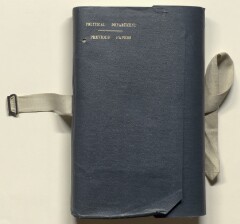

The marriage of the Shah’s eldest son was understandably a matter of public and diplomatic interest, but the match also bore a greater significance. The Pahlavis were relative newcomers, having taken over from the Qajar dynasty in 1925. By contrast, Fawziyyah came from a long line of Ottoman rulers descending from Muhammad ‘Ali Pasha An Ottoman title used after the names of certain provincial governors, high-ranking officials and military commanders. . Writing to the Foreign Office in London on 3 June 1938, the British Minister in Tehran states that ‘the engagement may also be regarded as bringing recognition that the Pahlevi [sic] family has “arrived”’ (IOR/PS/12/3443, f. 93r). British officers believed that the match would improve Iran’s international standing, but also that it represented ‘the bridging, or perhaps the ignoring, of the Sunni-Shiah cleavage’ (IOR/L/PS/12/3443, f. 93v).
Wedding Celebrations
Wheels were set in motion to mark ‘cette grande et heureuse union’ [this great and happy union] (IOR/L/PS/12/3443, f. 94r). With celebrations first in Cairo, and then in Tehran, the two houses competed to outdo one another. On 24 February 1939, the Crown Prince embarked for Egypt via Baghdad and Syria for the first leg of celebrations. In April, the newlyweds were on board the royal Egyptian steamship Muhamed Ali El Kebir of the Pharaonic Line bound for Iran.

The celebrations in Iran, which were attended by foreign aristocrats and royalty, are well documented in British records. One meticulous description was written by Allan Poland, Commodore Commanding, East Indies Station, Aden, who escorted King George VI’s representatives to the wedding: Princess Alice, Countess of Athlone, and her husband. Although sometimes expressed in degrading terms, Poland’s hour-by-hour account of events between 19-26 April spares no detail. The festivities included state dinners, tea parties, dance soirees, poetry recitals, military parades (with an air show and artillery display), marching bands, fireworks, and even an athletics ‘Youth Display’ which included ‘an extremely interesting exhibition of ancient Persian gymnastics’ (IOR/L/PS/12/3843, f. 16r).
Another detailed but less colourful account appears in the Tehran Intelligence Summaries for the periods ending 22 April and 6 May 1939. The celebrations culminated on the evening of 25 April in a procession through jubilant crowds to the Marble Palace, the royal couple’s new home and a gift from the Shah of Iran. Fawziyyah was also presented with a detachment of the 2nd (Fateh) Regiment in her name.

Both reports remark on Fawziyyah’s elegance and beauty, while Muhammad Reza is described as more aloof and less stylish. The reports also convey some tension between the Egyptians and Iranians. Poland perceived that the Egyptian delegation was ‘bent on showing how superior was Egypt to Iran and did not hesitate to indicate their contempt for anything which they did not consider up to their own standard’ (IOR/L/PS/12/3843, f. 12r). Moreover, Queen Nazli, Fawziyyah’s mother, and the other Egyptians are reported to have been dissatisfied ‘with the arrangements made for their comfort and with Iran and the Iranians’ (IOR/L/PS/12/3503, f. 165v). After the celebrations concluded, Queen Nazli and Fawziyyah’s younger sisters only stayed long enough to accompany the couple on the first few days of their honeymoon, then left Iran on 6 May.
Securing Succession
While the union between Muhammad Reza and Fawziyyah was reportedly welcomed by various factions of Iranian society, it nevertheless prompted a dispute over succession. The Iranian constitution provided that the Shah would be succeeded by his eldest son, if born to an Iranian mother. To legitimise the royal line, Fawziyyah therefore needed to become Iranian. However, a debate ensued about the difference between being Iranian through ‘essential’ and ‘accessory’ means.

The debate was finally settled by an Imperial decree issued on 9 February 1939, which conferred Iranian nationality on Princess Fawziyyah, thereby quelling any fears around succession. As it transpired, those fears were never put to the test. The marriage produced one child, a girl: Princess Shahnaz Pahlavi, born on 27 October 1940. Despite her grandfather’s reported disappointment, Shahnaz’s birth was widely celebrated. Her uncle, King Farouk, sent her a gift consisting of ‘a small illuminated Koran [Qur’an] within a gold box, studded with jewels’ (IOR/L/PS/12/3503, f. 271v).

Royal Duties
Less than a year later, against the backdrop of both domestic turmoil and World War II, Reza Pahlavi abdicated on 16 September 1941. Muhammad Reza was proclaimed Shah, and Fawziyyah became the new Queen of Iran.
As Queen, Fawziyyah played an important role as the face of a modern Iran, famously appearing on the cover of Life magazine in September 1942. British records from this time frequently allude to her royal engagements. They note that, in October 1943, an Irano-Soviet Aid Society was formed under her patronage, and in February 1944 she attended the final meeting of the committee organised to raise funds for Russian relief. In the same month, she accompanied her husband to the American military camp at Amirabad, and in April, they visited Gorgan in the wake of a devastating earthquake. In July, the royal couple attended a hockey match between two Indian military teams where Fawziyyah awarded the prizes.

Breakdown of the Marriage
However, mentions of Fawziyyah’s public engagements gradually fizzle out from British records. Those engagements seem to have been concealing deep marital discord, and the glamour of Fawziyyah’s role did not compensate for her unhappiness. In 1945, she travelled to Egypt on a “holiday” from which she never returned.
Related Articles


In the end, the marriage ‘did little to improve Egyptian-Iranian relations’ (IOR/L/PS/12/3472A, f. 250r), and its bitter conclusion overshadowed relations for some years. It also took several years to finalise the divorce. Antithetical to the speed and pomp with which it began, the union’s dissolution was a discrete and drawn out affair, in an attempt to mitigate a diplomatic fallout between the two countries.
Under the World’s Gaze and Through British Eyes
Even though it coincided with World War II, the marriage of Fawziyyah Fu’ad and Muhammad Reza Pahlavi captured the attention and imagination of people around the world. Their relationship, its breakdown, and the enigma of the Persian court where it all unfolded continue to inspire writers and filmmakers today. We can glean valuable insights into this relationship from administrative and intelligence accounts in the Persia Collection, written from the perspective of British officers looking to consolidate their interests in the two nations.
![Wedding of Mohammad Reza Pahlavi & Fawzia, 1939, photograph [accessed 31 July 2023]](https://commons.wikimedia.org/wiki/File:ModernEgypt,_Wedding_of_Mohammad_Reza_Pahlavi_%26_Fawzia,_DHP13655-20-5_01.jpg)